


A while ago, an engineer wrote to me after ten years in the industry.
Strong engineering skills, saw both plenty of greenfield and legacy. Built products alone, worked in teams, dabbled in AI before it was cool. On demand, he could spin up a micro-startup in mobile or frontend technologies.
His question wasn’t:
“Should I become a manager, start a company, or pivot to another engineering career?”
It was sharper:
“I know myself pretty well. There are too many options.
I don’t want you to tell me what to choose.
I want to know how to choose.”
That’s the right question for 2026.
Because the game has changed:
Layoffs are real.
AI isn’t going away, and code is cheaper.
Expectations are higher.
The problem is no longer “Will there be jobs?”
The problem is: Which people will those jobs be for?
1. The uncomfortable truth: some roles really are dying
Over the last years, we’ve seen:
Hundreds of thousands of layoffs in tech
Ongoing “skills shortage” at the same time
Executives talking about talent density, not headcount
It’s not a paradox.
Companies don’t want more people. They want more impact per person.
AI is enabling that, but only for those who know how to navigate.
Three profiles are especially fragile going into 2026:
Factory-style testers
People who:
Manually click through regression checklists all week
Sit in the middle of a dev → QA → release pipeline
Are the “gate” that everyone waits on for a green light
In organizations shipping multiple times a day, this model doesn’t scale. Automation eats it.
Here’s the harsh truth: Engineers who design for testability replace those who only execute test cases.
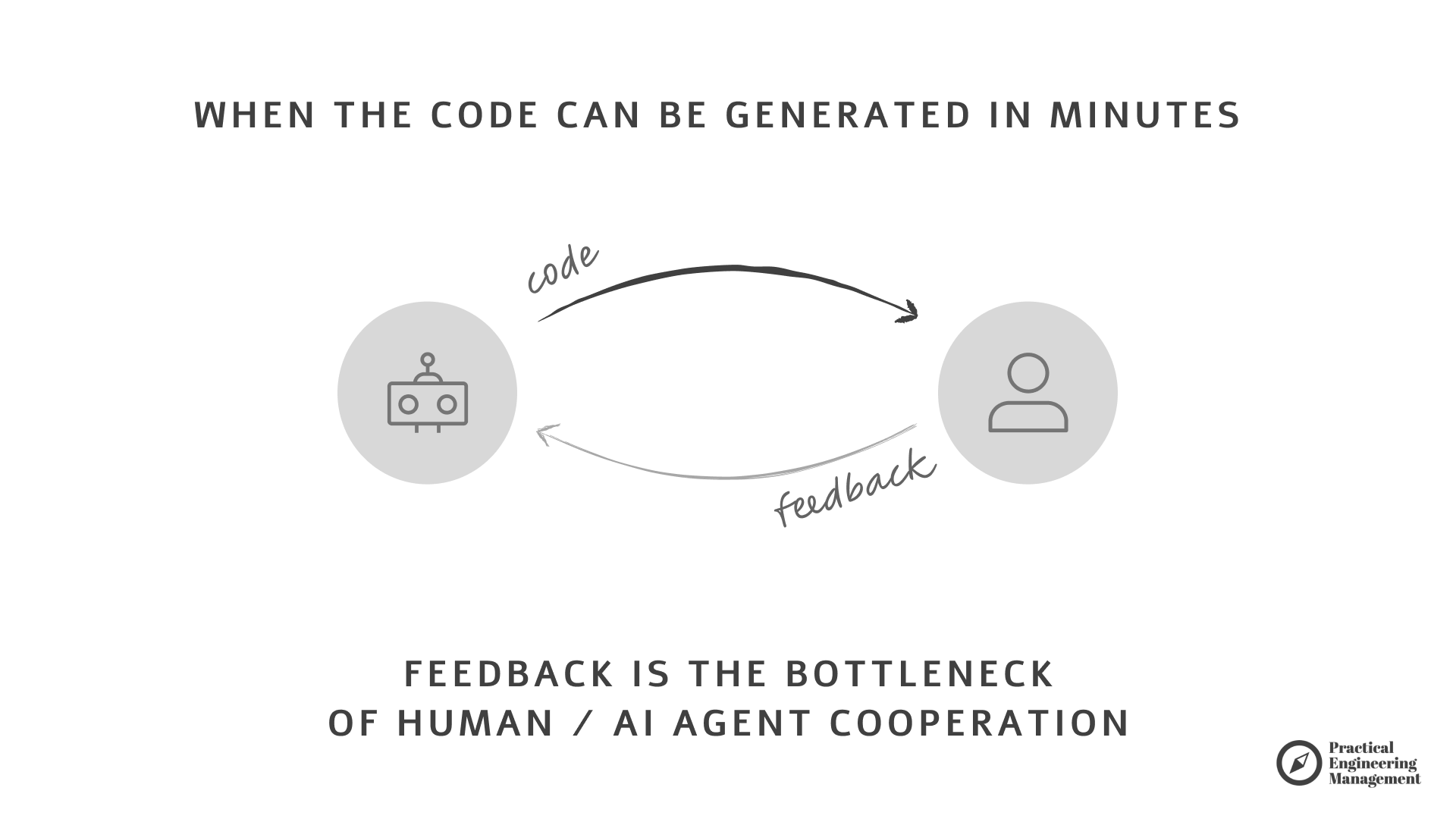
With AI, the challenge is on a whole new scale. Not because AI writes all of the tests. It’s because AI requires fast feedback loops, which regular QA testers cannot provide.
Coders who only “take tickets”
AI + better tooling + global talent have exposed a harsh category:
People who:
Wait for perfect Jira tickets
Don’t care what problem the feature solves
Don’t know how the product is used
Celebrate “Done” in Jira as the end of their responsibility
That role is being commoditized.
Cursor, Copilot, v0, etc. make it trivial to produce functioning code.
What they don’t do is:
Understand the business context
Decide what’s worth building
Make trade-offs under constraints
Own the outcome after deployment
Pure ticket-takers are sitting exactly where AI + cheaper labor + platforms hit first. It doesn’t matter that you deliver tickets quickly. Productivity was never about how much you can produce but how much real value you can generate.
What We Bring
Product Sense, Not Just Technical Skills
We understand users, business models, and market dynamics.
We’ve grown product sense through years of seeing what works and what doesn’t.
We’re not just coders—we’re problem solvers who happen to use code as our medium.
Read More on Product Engineering Manifesto

Transactional managers
2024 already showed the direction:
Fewer managers per IC
Larger teams per remaining leader
EM roles cut or transformed into more hands-on positions
The riskiest leaders in 2026:
Professional schedulers and resourcers
People whose “job” is: keep the board updated, run standups, escalate blockers
Managers who can’t articulate their value beyond “coordination.”
In a world where AI can summarize, update tickets, and draft status reports, this is not a durable advantage.
The leaders who stay are those who act as force multipliers:
Set standards and expectations
Shape architecture and practices
Bridge product, tech, and business
Reduce cognitive load and complexity
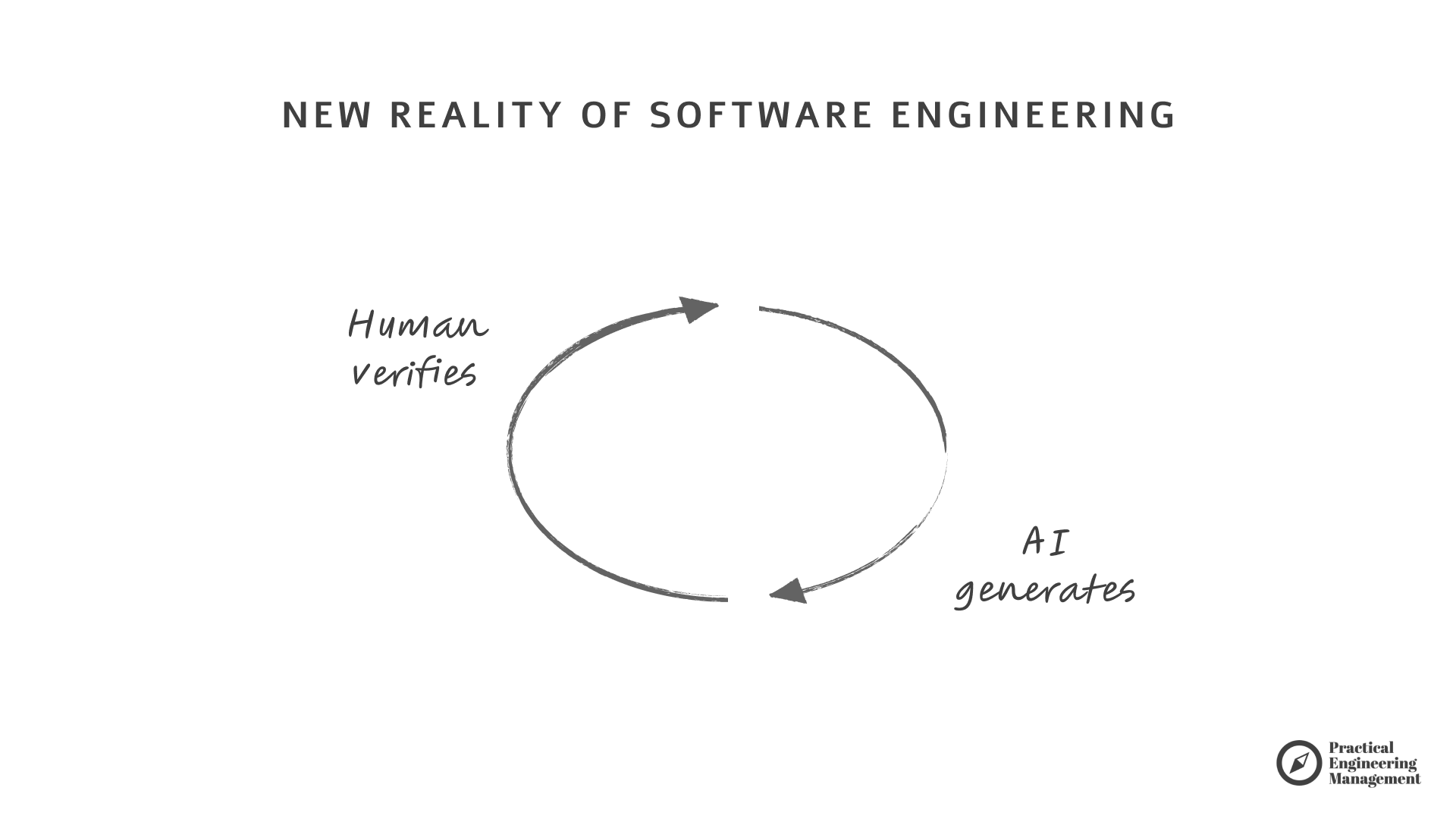
In the future, where we move From Engineers to AI Operators, these skills - keeping AI “on a leash” - specifying what good looks like, evaluating the output, and constant iterations, will become a critical part of our work.
2. AI isn’t replacing engineers. It’s amplifying the gap.
Let’s get AI out of the way.
No, it’s not going to flip a switch and fire every engineer overnight.
But it is doing three things you can’t ignore:
Making coding faster
Coding agents can cut the coding time for some tasks in half or shorter. Whether you like it or not.Exposing waste
If AI can generate features in days and still two-thirds of them don’t move the needle, it becomes painfully obvious the problem was never “too slow coding.” It was “building the wrong things” (According to Marty Cagan’s book Transformed, only 10-30% of shipped features actually yield positive outcomes).Compressing teams
If one engineer can ship what used to take two or three, orgs won’t keep the exact headcount forever. They’ll bet on smaller, stronger teams.
Which means:
AI doesn’t kill engineering.
It kills low-leverage ways of doing engineering.
The people at risk are not juniors.
It’s those who cling to the old job definition:
“You tell me what to build.
I’ll write the code.
We’ll measure success by ‘velocity.’”
That’s the role AI will happily chew through.
The entire article and PDF/docs are available only for paid subscribers. You can use the training budget (here’s a slide for your HR).
Thanks for supporting Practical Engineering Management!
