


Everyone is talking about AI as if it’s magic.
“Build an app in a day.”
“Ship features in hours.”
And yet… inside most companies, the reality is different:
AI generates a mountain of code.
Engineers spend time cleaning it up.
Velocity doesn’t move.
Quality drops.
Leaders start doubting the whole thing.
Because here’s the uncomfortable truth:
AI doesn’t replace engineering.
AI multiplies whatever engineering discipline you already have. (It’s DORA 2025 confirmed fact)
If your codebase is chaotic → AI accelerates the chaos.
If your standards are unclear → AI hallucinates.
If your feedback loops are weak → AI reinforces the weakness.
But here’s the other truth nobody talks about:
This is the biggest opportunity for software engineers and engineering leaders in 20 years.
Not to vibe-code.
But to become Operators — people who can shape intent, set constraints, and orchestrate AI’s output safely and predictably.
The AI Future Isn’t Automation. It’s Orchestration.
AI won’t take your job.
But someone who knows how to operate AI absolutely will.
Because the real leverage isn’t in typing code — it’s in:
Defining the spec so AI knows what “good” looks like.
Setting evals so AI can self-correct before you ever review a PR.
Providing context so AI works within your architecture and building blocks, not against them.
Designing feedback loops so you validate work in minutes, not weeks.
Those aren’t skills of the future. They are skills for today’s survival and tomorrow’s leverage.
A Practical Preview — Straight From the Book
If you want a simple, high-leverage exercise that will improve your AI output today, try this:
The “Vague → Vivid” Rewrite
Take one real task from your backlog — something simple like:
“Add search to the product page.”
Now rewrite it as if you’re onboarding a brand-new engineer who has zero context.
Example:
“In
pages/ProductPage.tsx, render<SearchInput />.
CallproductService.search(q)with a 250ms debounce.
Match results toListItemcomponent.
Ensure all tests insearch.test.tspass.”
Same system.
Same AI model.
Completely different outcome.
This tiny shift alone reduces hallucinations, shrinks diffs, and cuts review time dramatically.
And it’s just one of the 60+ practices inside the workbook I wrote.
Where This All Leads
Over the next few years, every engineering team will face the same strategic choices:
Where should AI help — discovery, prototyping, or production builds?
How do we keep speed without losing safety?
How do we prevent quality from collapsing under 10× output?
How do engineers grow when AI writes more of the code?
The teams that win won’t be the ones generating the most lines of code.
They’ll be the ones who:
write the clearest specs
maintain the best standards
enforce the tightest eval loops
and orchestrate AI with the discipline of operators
This is the new craft.
This is the new advantage.
And this is exactly why I wrote the book.
“From Engineers to Operators — The AI Strategy Workbook”
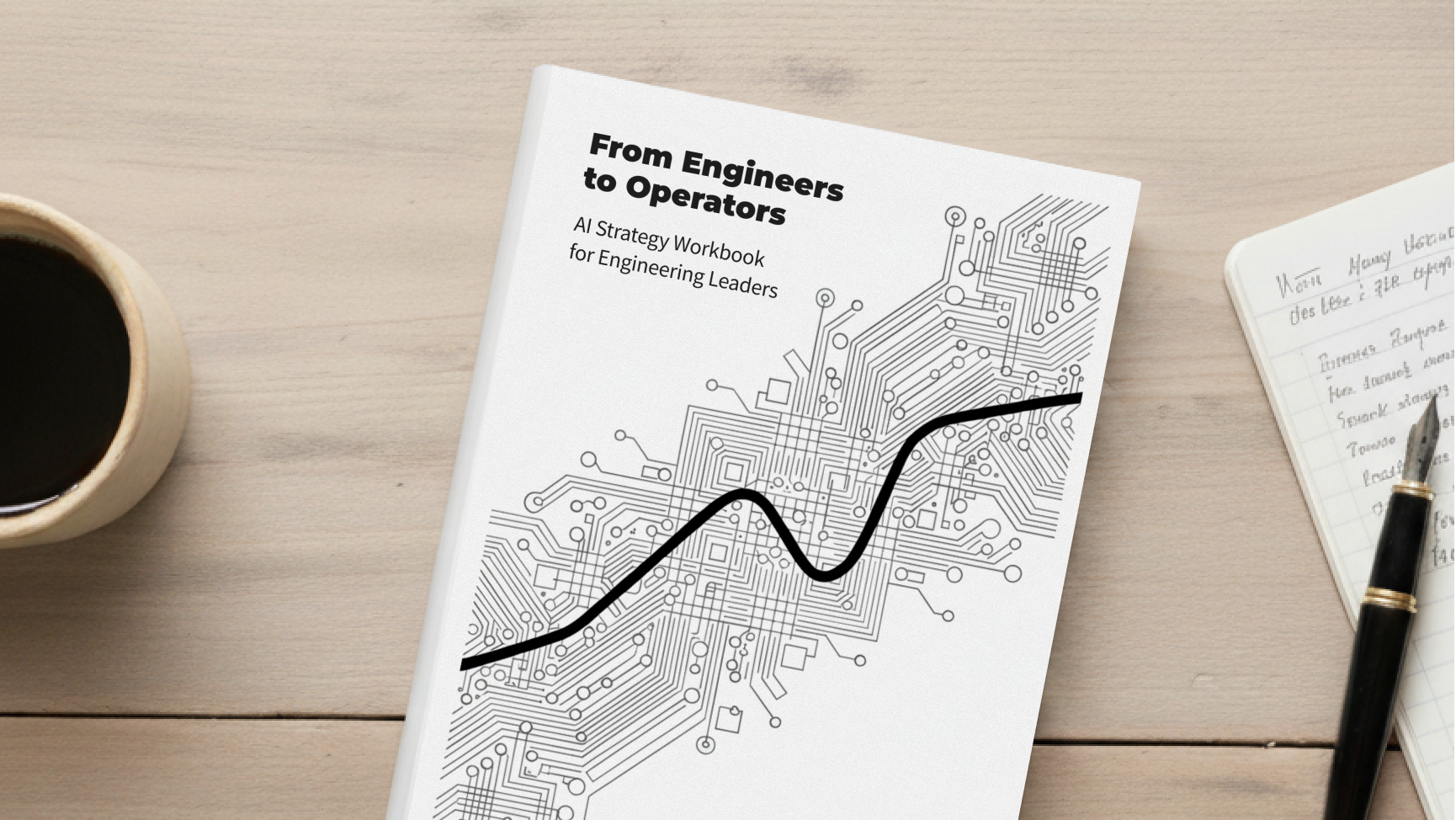
This workbook is my field guide for engineering leaders and ICs navigating the AI era.
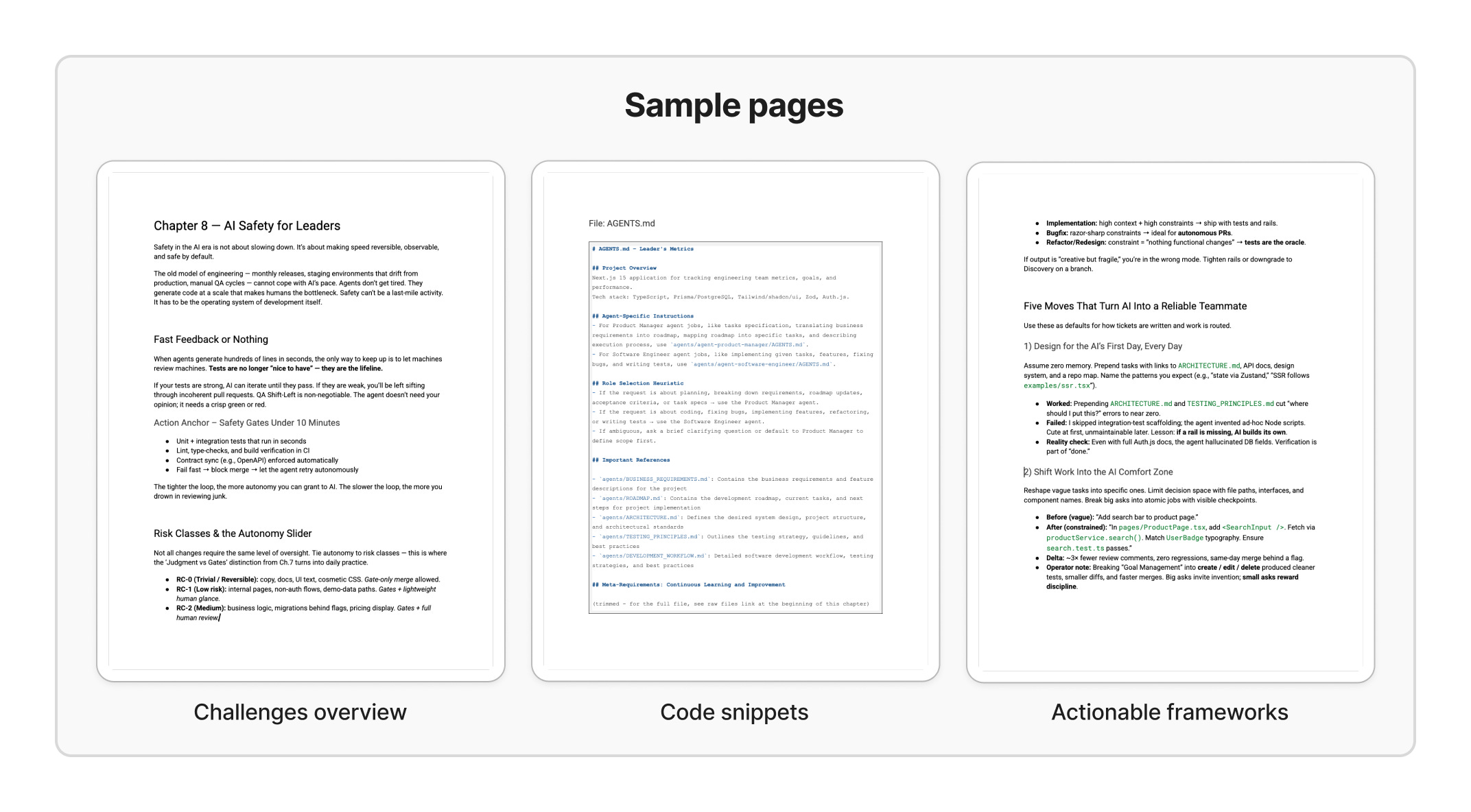
It includes:
Why AI works for some teams but not others
The Operator mindset (spec → eval → context → operate)
Frameworks for prototyping, delivery, and agentic development
Practical prompts and templates you can use tomorrow
How to design safe, reversible, high-velocity AI workflows
A one-page adoption scorecard for measuring impact
Read the free chapter from the book here.
And yes — there’s a 7-day money-back guarantee.
If it doesn’t help you become a better operator of AI, you get a full refund.
Final Thought
The AI hype will fade.
The AI craft will stay.
Engineers who learn to operate AI — not fear it, not worship it — will define the next decade of software development.
If you’re serious about leading your team through the AI era — beyond hype, toward leverage — check out the book here and start turning experiments into impact.
Let’s build what’s next — not fear it.
Psst, if you are a paying subscriber, here’s a discount for you 👇
